
What to Do in Agia Galini: Harbor evenings, hidden beaches, mountain roads and the slower side of Crete
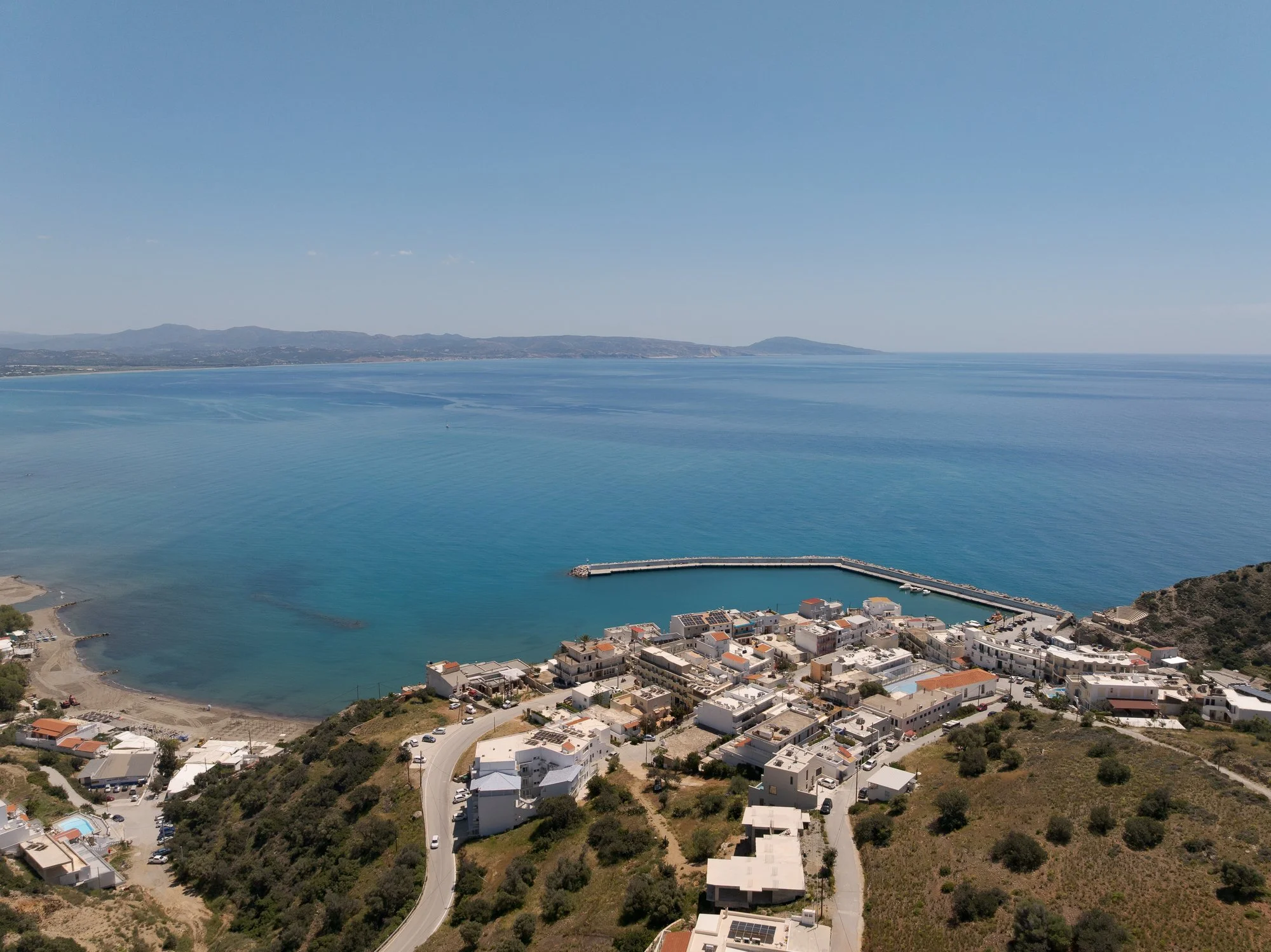
Some places in Crete feel designed around tourism.
Agia Galini feels designed around life that simply continued — and travelers happened to be invited into it.
Built amphitheatrically above a small harbor on the south coast of Crete, Agia Galini has managed to keep a curious balance. It is lively without becoming chaotic. Touristic without losing its identity. Relaxed without feeling sleepy.
You can spend the morning swimming, the afternoon driving through mountain villages, and the evening eating grilled fish by the harbor while watching cats negotiate with fishermen over octopus scraps.
And after a few days, many visitors realize they are no longer really following plans.
They are following moods.
Start the Morning Slowly
Agia Galini is best experienced without rushing.
Mornings here arrive gently. Shops open slowly. Coffee lasts long. The harbor remains calm before the heat settles over the hills.
One of the pleasures of staying in town is simply walking downhill toward the waterfront early in the day, before excursion boats leave and tavern terraces begin filling up.
This is the hour for:
Greek coffee
fresh pastries
sea air
quiet conversations
watching village life wake up
If you stay somewhere slightly elevated like Galini Breeze, mornings become part of the experience themselves — soft light over the Libyan Sea, warm wind moving through the hills, and the comforting realization that nothing particularly urgent is expected from you today.
Explore the Harbor and Old Village Streets
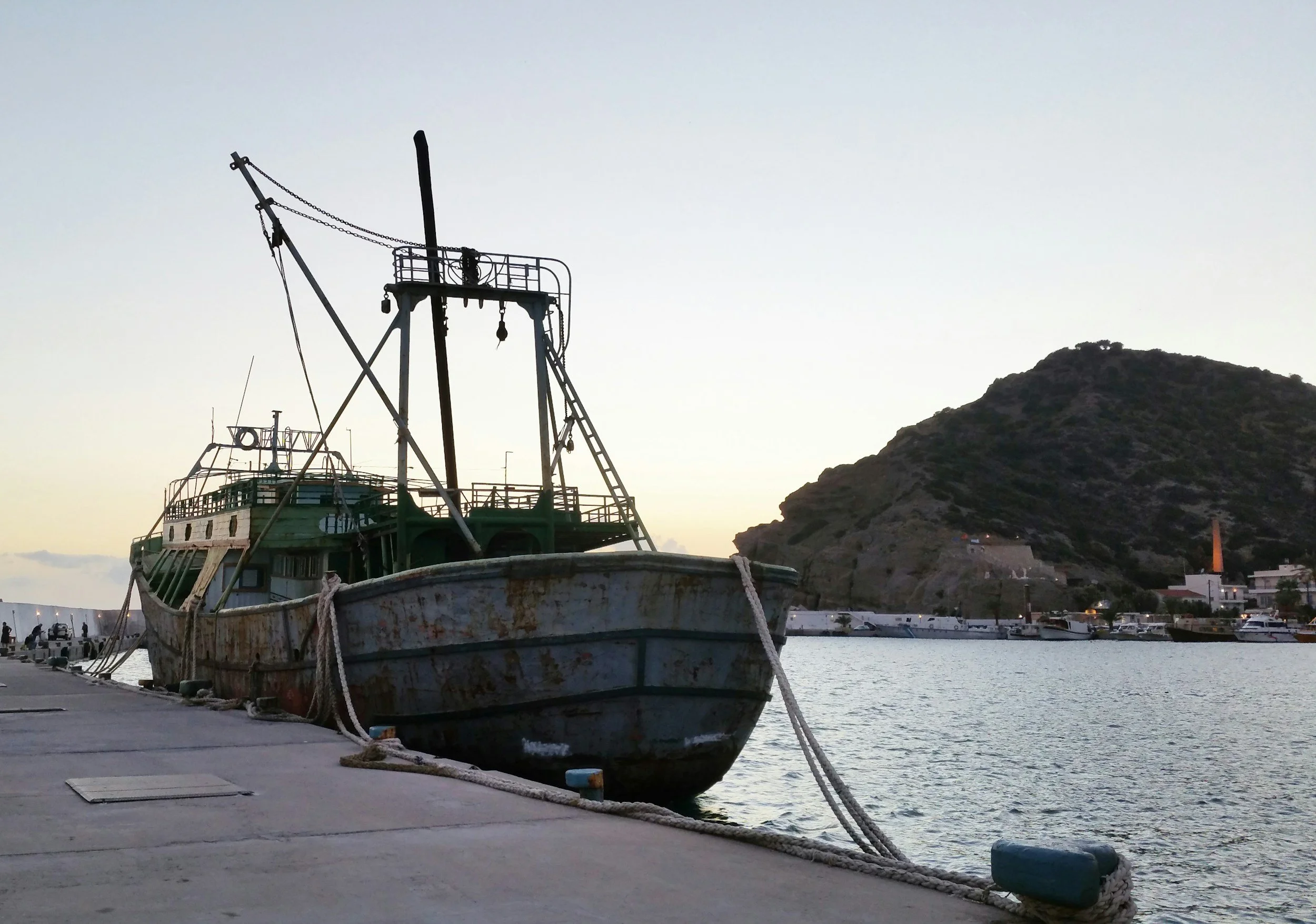
Agia Galini’s harbor is still very much the center of daily life.
Long before Agia Galini became a relaxed seaside village for travelers, hikers and beach lovers, this bay already played a role along Crete’s south coast.
The area was once linked to the ancient settlement of Soulia, believed to have served as the harbor of ancient Syvritos during Minoan times. Centuries later, the naturally protected bay became an important export point for olive oil and goods coming down from the mountain village of Melambes and the fertile inland regions of South Crete. Even today, older locals still speak about the days when donkeys carried products down the steep mountain roads toward the harbor.
The modern settlement itself only began developing permanently in the late 19th century, when families from villages like Melambes and Saktouria gradually moved closer to the coast and established what would become present-day Agia Galini.
And somehow, despite tourism, the village still retains something of that original harbor spirit: practical, welcoming, weather-shaped, and deeply connected to the mountains behind it.
Fishing boats sit beside excursion boats. Elderly locals drink coffee beside digital nomads typing on laptops. Cats appear with astonishing organizational efficiency whenever fish is involved.
Behind the waterfront, narrow stairways and winding alleys climb upward through the old village. You’ll find small tavernas, whitewashed houses, little shops, and terraces overlooking the sea.
Unlike some heavily polished resort towns, Agia Galini still feels pleasantly imperfect.
And that is part of its charm.
Myths, Tunnels and Strange Local Stories
Agia Galini has also always had a slightly mythical atmosphere.
Above the harbor, an open-air amphitheatre overlooks the Libyan Sea, home to the well-known statues of Daidalos and Ikaros. According to local tourist lore, this was supposedly the point from which the legendary inventor and his son began their flight away from Crete using wings made of feathers and wax.
Historically, the story actually belongs to Knossos and the labyrinth of King Minos rather than Agia Galini itself — but the dramatic cliffs and endless sea views here certainly make the legend feel believable for a moment.
The amphitheatre remains one of the village’s most beautiful sunset spots, especially in the quieter evening hours when the harbor below begins glowing softly in the fading light.
Agia Galini also carries traces of more recent history. During the Second World War, German occupation forces constructed tunnels and defensive positions in the surrounding hills due to the strategic importance of the south coast. One of the old war tunnels still exists near the village today, quietly hidden among the rocks — a reminder that even places now associated with calm holidays once stood much closer to history’s harsher edges.
Like much of South Crete, Agia Galini reveals itself slowly. The longer you stay, the more layers seem to appear.
Spend a Day Beach-Hopping Along the South Coast
One of the biggest advantages of staying in Agia Galini is how centrally positioned it is for exploring South Crete.
Within relatively short driving distances, you can experience beaches that feel completely different from one another.
Kommos Beach
Wide, open, relaxed, and popular with travelers seeking a quieter atmosphere. Parts of the beach have long attracted naturists and free-spirited travelers due to the spacious and laid-back setting.
Preveli Beach
One of Crete’s most iconic landscapes, where a palm forest and river meet the sea. Best visited earlier in the morning before excursion crowds arrive.
Triopetra
Famous for dramatic sunsets, vast scenery, and a more elemental feeling. Particularly beautiful on windy days when the sea becomes theatrical.
Agios Georgios Beach
A quieter bay with wonderfully clear water and a calmer atmosphere than some of the larger beaches nearby.
Hidden coves west of Agia Galini
Some of the best swimming spots are simply found by driving coastal roads and stopping when the landscape suddenly looks irresistible.
In South Crete, spontaneity is often rewarded.
Drive or Hike Through the Gorges
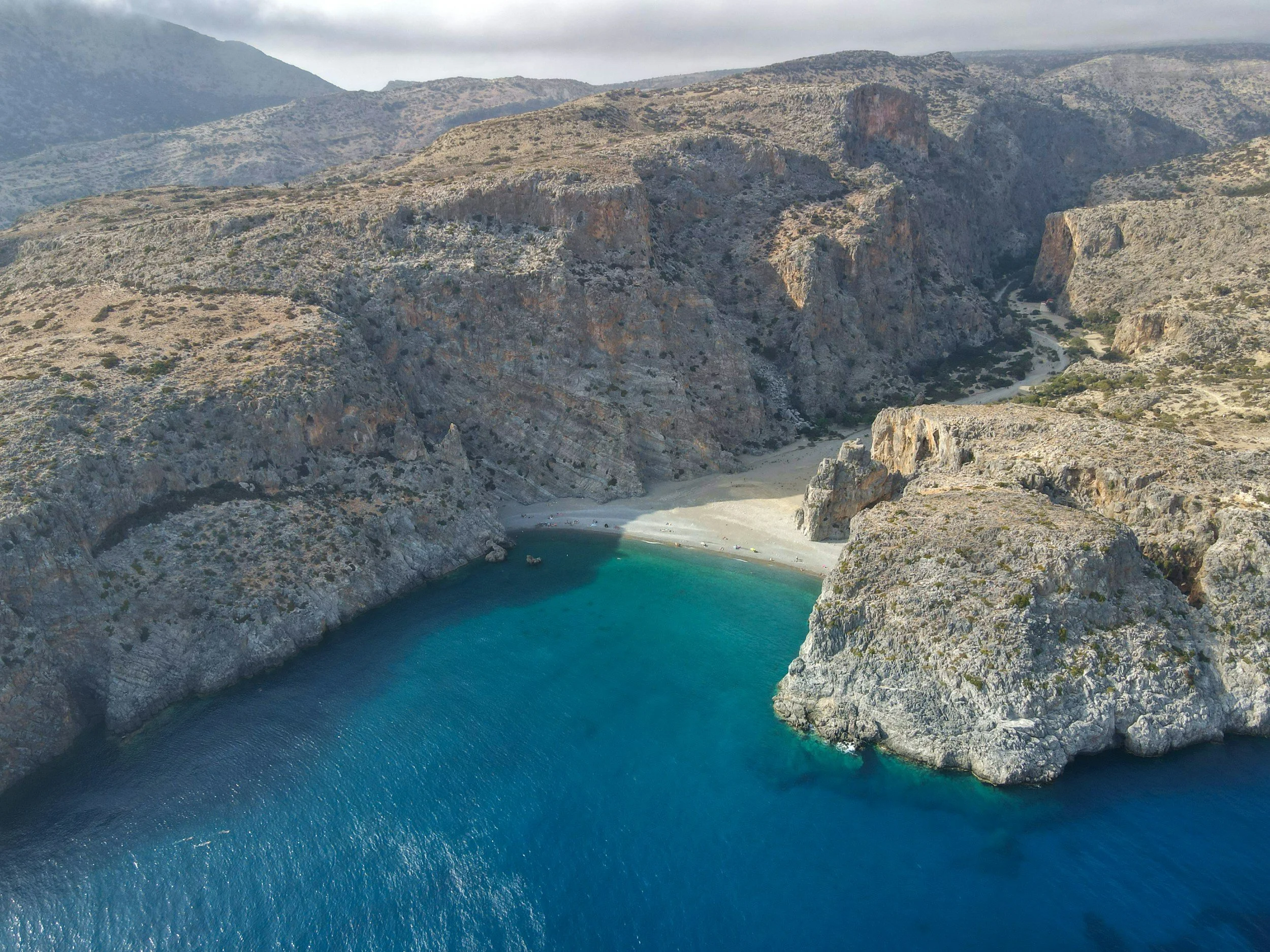
The roads of South Crete are part of the experience.
Especially if you drive through Kourtaliotiko Gorge or Kotsifou Gorge, the journey itself feels cinematic — steep cliffs, winding mountain roads, sudden sea views, and landscapes that look almost impossibly rugged.
If you enjoy scenic driving, South Crete is one of the most rewarding parts of the island.
Just do not expect to arrive anywhere quickly.
Goats, viewpoints, tavernas, swimming temptations, and “just one more stop” tend to interfere with efficiency.
Also, some of the most beautiful hikes lead through gorges, such as Patsos and Agiofarago
Eat Slowly and Generously
Agia Galini is not a place for rushed meals.
Dinner here often starts late and ends even later.
Along the harbor and in the upper village streets, tavernas serve:
grilled fish
lamb
dakos
fresh salads
local olive oil
slow-cooked dishes
raki that mysteriously continues appearing after dessert
Some restaurants are more refined, others wonderfully old-fashioned.
The best approach is often simply choosing the place that feels right in the moment.
Busy tables filled with Greeks are usually a promising sign.
Watch the Sunset Without Overplanning It
Unlike heavily curated sunset destinations, Agia Galini’s evenings still feel natural.
People gather organically:
along the harbor
on terraces
near the beach
outside cafés
on balconies overlooking the sea
The light softens. The hills turn gold. The harbor becomes louder but somehow calmer at the same time.
And then the entire village seems to drift naturally toward dinner.
Discover Why People Return Again and Again
Many travelers originally visit Agia Galini because it appears conveniently located on a map.
But they return because of atmosphere.
Because the village still feels human-scale. Because South Crete remains refreshingly unpolished. Because life here revolves around sea, food, conversation, wind, and landscape rather than schedules and entertainment programs.
At adults-only stays like Galini Breeze, that slower rhythm becomes even more noticeable. Guests often arrive intending to explore the entire island — and end up spending entire afternoons doing very little at all.
Which, in South Crete, is usually a sign the holiday is going well.
FAQ About Agia Galini
Is Agia Galini worth visiting?
Absolutely. Agia Galini combines authentic village atmosphere, beaches, harbor life, scenic surroundings, and easy access to many of South Crete’s best landscapes.
How many days should you stay in Agia Galini?
Most visitors stay at least 3–5 days, though many end up wishing they had planned longer due to the relaxed pace and variety of nearby beaches and villages.
Is Agia Galini good for couples?
Very much so. The village is especially popular among couples looking for slower holidays, scenic dinners, beach-hopping, and adults-only stays.
Can you swim in Agia Galini?
Yes. Agia Galini has its own beach, and many larger beaches nearby can easily be reached by car.
Do you need a car in Agia Galini?
A car is highly recommended if you want to fully explore South Crete’s beaches, mountain villages, and hidden coves.